- Open Hours: 9AM to 6PM: (Mon-Sat)
- care@mobisafar.com
- 0161-5015050 Join Us


Financial technology companies need dependable infrastructure to deliver digital banking services to their customers, agents and business partners. AEPS APIs can help fintech platforms connect their applications with supported Aadhaar-enabled banking functionality while keeping the customer experience within their own digital ecosystem.
Choosing the Best AEPS API provider in India requires careful evaluation of API architecture, transaction processing, authentication, security, documentation, support, scalability and integration capabilities.
Mobisafar operates a financial and digital-services ecosystem that includes AEPS, domestic money transfer, Micro ATM, QR ATM and other banking services. Its published AEPS information describes secure transaction infrastructure, biometric authentication, transaction processing and banking API technology.
A Top AEPS API provider for fintech should offer technology that can fit into different types of financial applications and business workflows.
Fintech companies may need AEPS functionality for:
An API-based model can allow businesses to connect their front-end application with backend financial-service infrastructure instead of building every banking function from the ground up.
The technology provider should offer clear integration processes, appropriate authentication, transaction-status handling and operational support.
An AEPS API is a software interface that enables an authorized application or platform to communicate with AEPS-related financial infrastructure.
Instead of a retailer or customer interacting directly with a backend banking system, the application can send an authorized transaction request through the relevant API infrastructure.
A typical AEPS API ecosystem can involve:
The exact API flow depends on the provider, banking partners, technical architecture and applicable regulatory requirements.
Businesses searching for a High success rate AEPS API should avoid evaluating an API solely through a promotional success-rate figure.
Transaction success can depend on multiple external and internal factors, including:
A strong API provider should therefore focus on reliable infrastructure, appropriate error handling, transaction-status visibility and operational monitoring.
Mobisafar describes its AEPS platform as providing transaction processing, secure authentication and real-time validation capabilities.
The technical process can vary, but an AEPS integration generally involves several stages.
Customer Request
The application collects the information required to initiate the eligible banking transaction.
Authentication
The customer's identity is authenticated using the supported AEPS authentication mechanism.
API Request
The authorized application sends the transaction request through the applicable API infrastructure.
Transaction Processing
The request is processed through the relevant banking and AEPS ecosystem.
Response
The application receives a transaction response indicating the applicable status.
Reconciliation
The business can use transaction records and reports to reconcile successful, failed or pending transactions.
A robust backend should be designed to handle different response scenarios rather than assuming every request will immediately produce a successful result.
A Best AEPS API with multi-bank support can be valuable for fintech businesses that need to serve customers associated with different participating banks.
AEPS is designed around an interoperable banking model, allowing eligible customers to access supported banking services through authorized service points.
Mobisafar's banking-services information describes AEPS as an interoperable financial-inclusion model and lists services such as cash withdrawal, cash deposit, balance enquiry, Aadhaar-to-Aadhaar fund transfer and mini statement.
For fintech companies, multi-bank capability can reduce the need to create separate application flows for individual banks where the underlying service architecture supports interoperability.
However, businesses should always verify the provider's current participating-bank coverage and API availability before committing to an integration.
A fintech platform may have customers using accounts with different banks.
If the API ecosystem supports the relevant participating banks, the fintech can provide a more consistent customer experience through a single application interface.
Potential benefits include:
The exact participating banks and transaction capabilities should be confirmed directly with the API provider.
The Top AEPS backend service provider should provide more than a basic transaction endpoint.
A complete backend environment may need to support:
Transaction Processing
The backend should securely process authorized requests and return appropriate responses.
Authentication
The system should support the authentication mechanisms required for the applicable AEPS service.
Transaction Status
Businesses need clear responses for successful, failed and pending transactions.
Wallet and Ledger Management
Where applicable, the backend may maintain wallet and ledger information for authorized users.
Reporting
Transaction reports can help businesses reconcile operational and financial records.
User Management
Fintech platforms may require different roles for administrators, distributors, retailers and other authorized users.
Monitoring
Backend monitoring can help identify service interruptions, unusual transaction patterns and operational issues.
Mobisafar's published AEPS information describes transaction dashboards, reporting tools, commission management and secure data handling as part of its AEPS technology environment.
The term NPCI integrated AEPS software provider should be used carefully.
AEPS operates within India's regulated payment infrastructure, and NPCI plays an important role in the broader AEPS ecosystem. However, a business should not assume that every AEPS software company is itself directly integrated with NPCI.
There can be multiple layers involving:
Businesses evaluating an NPCI integrated AEPS software provider should ask the provider to clarify its exact role, authorized relationships and integration architecture.
This is especially important for fintech companies because regulatory and contractual responsibilities can differ depending on the business model.
Financial APIs require careful attention to security and compliance.
An AEPS technology stack may involve several important components:
Mobisafar's published content states that its AEPS infrastructure uses secure authentication, encrypted data transmission, transaction validation and security-focused processes.
Fintech businesses should independently verify the applicable technical and compliance requirements before implementing an AEPS integration.
A Top AEPS gateway provider in India should provide a reliable bridge between the fintech application's user interface and the underlying financial transaction infrastructure.
The gateway layer can help manage:
The quality of this gateway layer can significantly influence the application experience.
For example, if a transaction response is delayed, the application should be able to identify the transaction state instead of incorrectly showing the customer that the transaction has failed.
Security is especially important when dealing with biometric authentication.
A Secure biometric AEPS API provider should have appropriate controls around authentication, data handling, API access and transaction processing.
Businesses should ask potential technology partners about:
Authentication Security
How are authentication requests securely transmitted and processed?
Data Protection
What controls are used to protect sensitive information?
API Authentication
How are API clients authenticated and authorized?
Transaction Integrity
How does the system prevent unauthorized modification of transaction requests?
Monitoring
How are suspicious or unusual activities identified?
Access Control
How are different API users, administrators and business partners separated?
Mobisafar states that its AEPS service uses biometric authentication and secure transaction processes.
An AEPS API can be useful when a fintech business wants to integrate banking functionality into an existing application.
For example, a fintech application could provide a retailer with a dashboard containing:
The API layer can remain behind the application interface while the retailer interacts with a simplified front end.
This separation can make it easier for the fintech company to control the user experience while relying on specialized financial infrastructure for the underlying service.
A technically strong API is only useful if developers can integrate it efficiently.
When evaluating an AEPS API provider, ask for:
Clear documentation can significantly reduce integration time and help developers troubleshoot issues more efficiently.
A reliable AEPS backend should be capable of handling different transaction outcomes.
Common states can include:
Successful: The transaction has completed successfully.
Failed: The transaction could not be completed.
Pending: The final status is not yet available.
Reversed: A previously processed transaction has been reversed according to the applicable process.
The application should not treat every non-success response as a simple failure.
Correct status handling is particularly important for fintech applications because incorrect status messaging can create customer confusion and reconciliation problems.
A growing fintech platform may start with a small number of users and gradually expand its retailer or customer network.
The API infrastructure should therefore be evaluated for scalability.
Important considerations include:
The technology should be able to evolve with the business rather than requiring a complete replacement as transaction volumes increase.
Mobisafar provides AEPS and other financial-service infrastructure within a broader digital ecosystem.
Its published AEPS information describes:
Mobisafar's broader banking-services portfolio also includes money transfer, AEPS, Micro ATM, QR ATM, prepaid card and multiple CSP services.
This broader ecosystem can be relevant to fintech businesses that want AEPS functionality alongside other financial services.
Businesses interested in API, technology or partnership requirements should contact Mobisafar directly at care@mobisafar.com to confirm the currently available integration options and technical specifications.
Before selecting an API partner, fintech businesses should create a technical and commercial checklist.
1. Verify API Capabilities
Confirm which AEPS services and transaction types are actually supported.
2. Review Integration Documentation
Ask for complete API documentation and testing resources.
3. Understand Authentication
Review the authentication and biometric workflow used by the integration.
4. Check Transaction Handling
Understand how successful, failed, pending and reversed transactions are communicated.
5. Evaluate Security
Review encryption, access controls, monitoring and data-protection processes.
6. Verify Bank Coverage
Confirm the current participating-bank ecosystem rather than relying on generic "multi-bank" claims.
7. Understand Regulatory Relationships
Ask the provider to explain its role within the AEPS and payment ecosystem.
8. Review Technical Support
Determine how integration and production issues are handled.
9. Consider Scalability
Make sure the infrastructure can support future growth.
10. Evaluate the Complete Platform
Consider whether the provider can support additional services as your fintech business develops.
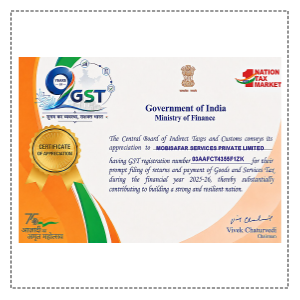
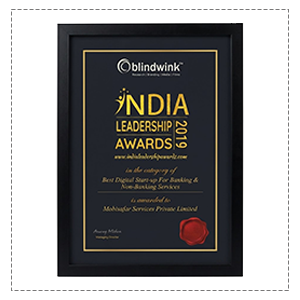
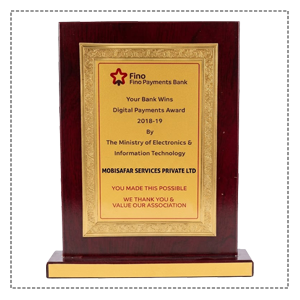
Honored to be recognized for excellence, innovation and impactful contributions.













The AEPS technology provides a structured way to add Aadhaar-based banking functionality to our digital-service ecosystem.
The transaction management and reporting capabilities make it easier to manage our financial-service operations.
The broader financial-service ecosystem gives us flexibility when expanding our digital platform.
The AEPS platform is useful for supporting retailers who need access to assisted banking services.
Having AEPS alongside other financial services gives our business a more complete service offering.
Our Common Queries (FAQs) section is designed for provide quick
answers to
the most frequently asked questions.
The Best AEPS API provider in India should combine reliable technology, secure authentication, effective transaction processing, useful documentation and appropriate business support.
A Top AEPS API provider for fintech should provide infrastructure that can integrate with retailer, CSP, financial and digital-service applications.
When evaluating a High success rate AEPS API, businesses should consider the complete transaction ecosystem rather than relying on a single success-rate claim.
A Best AEPS API with multi-bank support should provide clear information about participating banks and supported transaction services.
The Top AEPS backend service provider should support transaction processing, status management, reporting, security and reconciliation.
Businesses searching for an NPCI integrated AEPS software provider should verify the provider's exact role and authorized integration relationships rather than assuming direct NPCI integration.
A Top AEPS gateway provider in India should offer dependable API connectivity and accurate transaction-status handling.
Finally, a Secure biometric AEPS API provider should prioritize authentication security, encrypted communication, access controls and appropriate data protection.
Mobisafar provides AEPS technology and a broader financial-services ecosystem, with published information covering secure transactions, biometric authentication, transaction processing and AEPS software functionality.
